ServicesDock Levelers
Dock Leveler Repair in Nanticoke
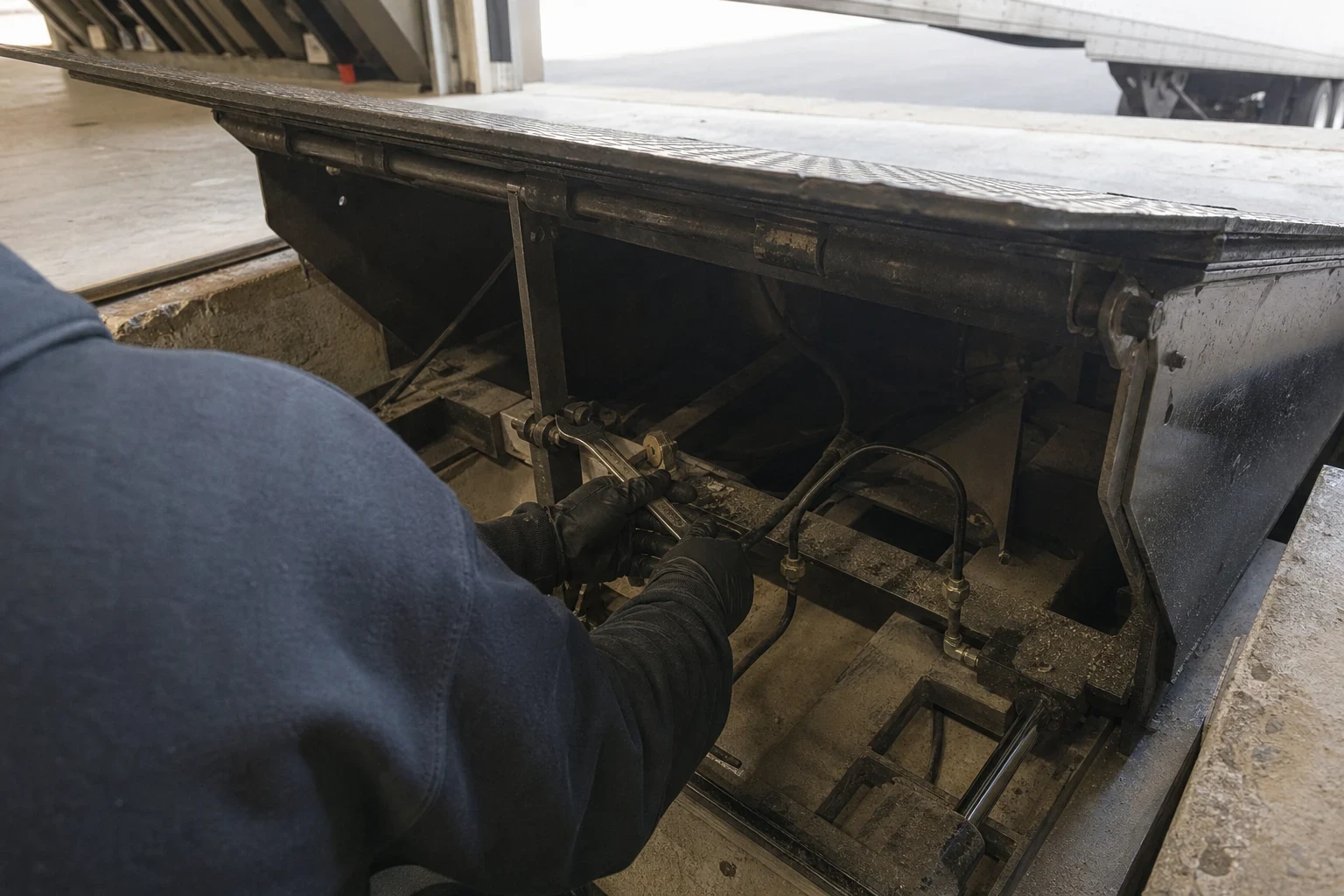
When a leveler sinks under a forklift, sticks halfway or leaves its lip hanging, every trailer takes longer and the dock becomes less safe. We service hydraulic, mechanical and air-powered levelers on site and show you pictures of each fault before you sign off on a repair.
When a dock leveler needs attention
Few machines in a building work as hard as a dock leveler. Loaded forklifts roll across the deck all day, trailers of different heights press against the lip, and the pit below fills with pallet splinters, stretch film and road grit. A little play in a hinge pin or a tired hold-down slowly becomes a lip that won't extend, a deck that bounces, or a platform that drops when the load moves.
We repair what you already have. Our technicians go through the springs, cylinders, welds and safety legs, then give you a straight answer: is this unit worth fixing, or has it worn past the point where repair money is well spent. Each finding is photographed so you can judge it yourself. When a new unit is the better choice, our Loading Dock Equipment Installation page explains that work.
What we repair on a leveler
Hinges and lips
Worn hinge pins and tubes are the usual reason a lip stops sitting flat on the trailer bed. We replace pins, repair cracked hinge welds, and straighten or swap out bent lips.
Hydraulic components
We go through the cylinders, hoses, fittings, power unit and velocity fuse. Leaking seals and hoses are replaced, and we check the fluid, because dirty or thickened oil leaves a deck crawling upward on cold mornings.
Springs and hold-downs
Pull-chain mechanical units depend on balanced lift springs and a working hold-down. We adjust or replace both so the deck stays put under weight.
Air-powered units
The air bag, blower and controls are tested, and torn bags or burned-out blower motors are replaced.
Deck, toe guards and pit
Cracked deck plate and broken toe guards get welded or replaced. We clear debris that can jam moving parts, and we point out worn bumpers, since they shield both the leveler and the wall behind it.
Signs your dock leveler needs repair
A lip that hangs or won't fold
If the lip stalls partway or never settles onto the trailer, the cause is usually worn hinge pins, a weak lip spring or a hydraulic fault.
Sinking or rebounding deck
A platform that settles while a forklift sits on it, or kicks up hard as the load rolls off, points to the cylinder, springs or hold-down.
Fluid in the pit
Oil on the pit floor means a seal or hose has let go, and it makes the pit slick for anyone who steps in.
Cracks near hinges or edges
Fine cracks spread with every forklift pass. Found early, most are a straightforward weld repair rather than a new deck.
Grinding or slow travel
Banging, grinding or a deck that rises lazily in the cold means something inside the unit has changed.
How a dock leveler repair runs
- 1
Start with the details
On the call, share the brand if it is on the nameplate, which doors are giving trouble, and what the deck or lip is doing. With that, we can usually arrive carrying the parts the job is likely to need.
- 2
Lockout and inspection
We lock out the leveler, set the maintenance strut and work from the lip back to the pit. Every leak, crack and worn part is photographed as we go.
- 3
Review and written estimate
We sit down with you over the pictures and a written, line-item estimate. You choose what gets done now and what can wait, and we mark clearly which items bear on safety.
- 4
Repair, cycle and confirm
After the approved work, we run the leveler through its full travel and check the lip, hold-down and safety legs. You receive after shots of the finished repair for your records.
What affects the cost of a dock leveler repair
Every leveler wears in its own way, so we price from what the inspection turns up rather than a flat rate. Parts and labor appear as separate lines on the estimate, and the pictures show why each line is there.
- Leveler type
- Hydraulic, mechanical and air bag designs each call for their own parts list and their own amount of labor.
- Parts sourcing
- Standard hinge pins, hoses and seals are easy to get. Older or discontinued models may need parts tracked down or fabricated.
- How far the damage runs
- One cracked weld is quick work. Cracking along the deck, lip or frame means more steel, more welding and more hours.
- How many doors
- Handling several levelers in a single visit tends to cost less per door than separate trips.
- Your receiving schedule
- Fitting the work around live receiving or a second shift can change how the job is staged and how long it runs.
Common dock leveler questions
Something not covered here? (570) 678-1589
Is it better to repair our dock leveler or replace it?
A leveler can usually be repaired several times before a new one makes sense. A frame with heavy cracking, a damaged pit or a model whose parts are gone generally points to replacement. Our pictures show you the condition, so you make the decision with the facts in hand.
Can we keep the dock running during the repair?
The leveler we are repairing must stay locked out, but the doors on either side can usually stay in use. We settle the order of work with you beforehand so trailers keep moving.
Which leveler brands do you service?
We work on hydraulic, mechanical and air-powered levelers from the major makers. If the model is readable on the nameplate, give it to us when you call and we will have parts lined up before we arrive.
Why is our hydraulic leveler sluggish in winter?
Hydraulic oil thickens in the cold, and an open dock door during a Pennsylvania winter gets very cold. Old or dirty fluid adds to the problem. New fluid and a look at the power unit often bring the speed back to normal.
How can we stop the same breakdowns from happening again?
Regular inspections find worn hinges, small leaks and early cracks before they take a door out of service. Our Loading Dock Preventative Maintenance program services levelers, overhead doors and vehicle restraints on a set schedule.
Get your leveler moving again
Give us a quick picture over the phone of which doors are down and how the deck is acting. We will set up the visit and go over every finding with you before a wrench turns.