ServicesEquipment Installation
Loading Dock Equipment Installation in Nanticoke
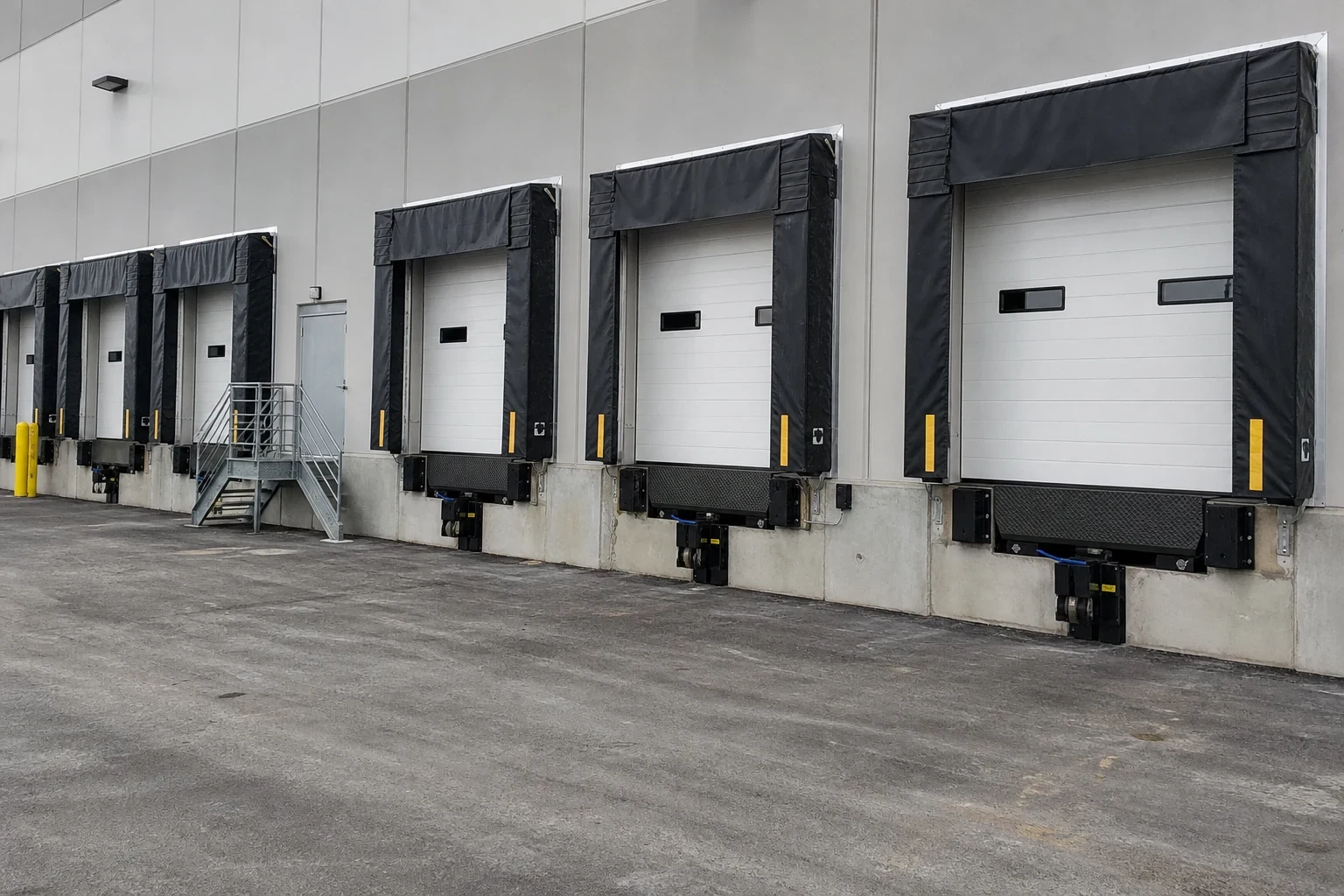
We install dock levelers, vehicle restraints, overhead doors, high speed doors and rolling grilles at working facilities. Each position is measured against the trucks you actually receive, and you get photos of the pit, anchors and connections before anything is closed up.
New equipment, fitted to the dock you have
Installation is the right call when a position is being added, when old equipment has reached the point where repair no longer makes sense, or when your trailer mix has changed and the dock no longer matches it. A leveler sized for a fleet of standard trailers can leave a gap or a steep grade once refrigerated units and low-deck trucks start backing in.
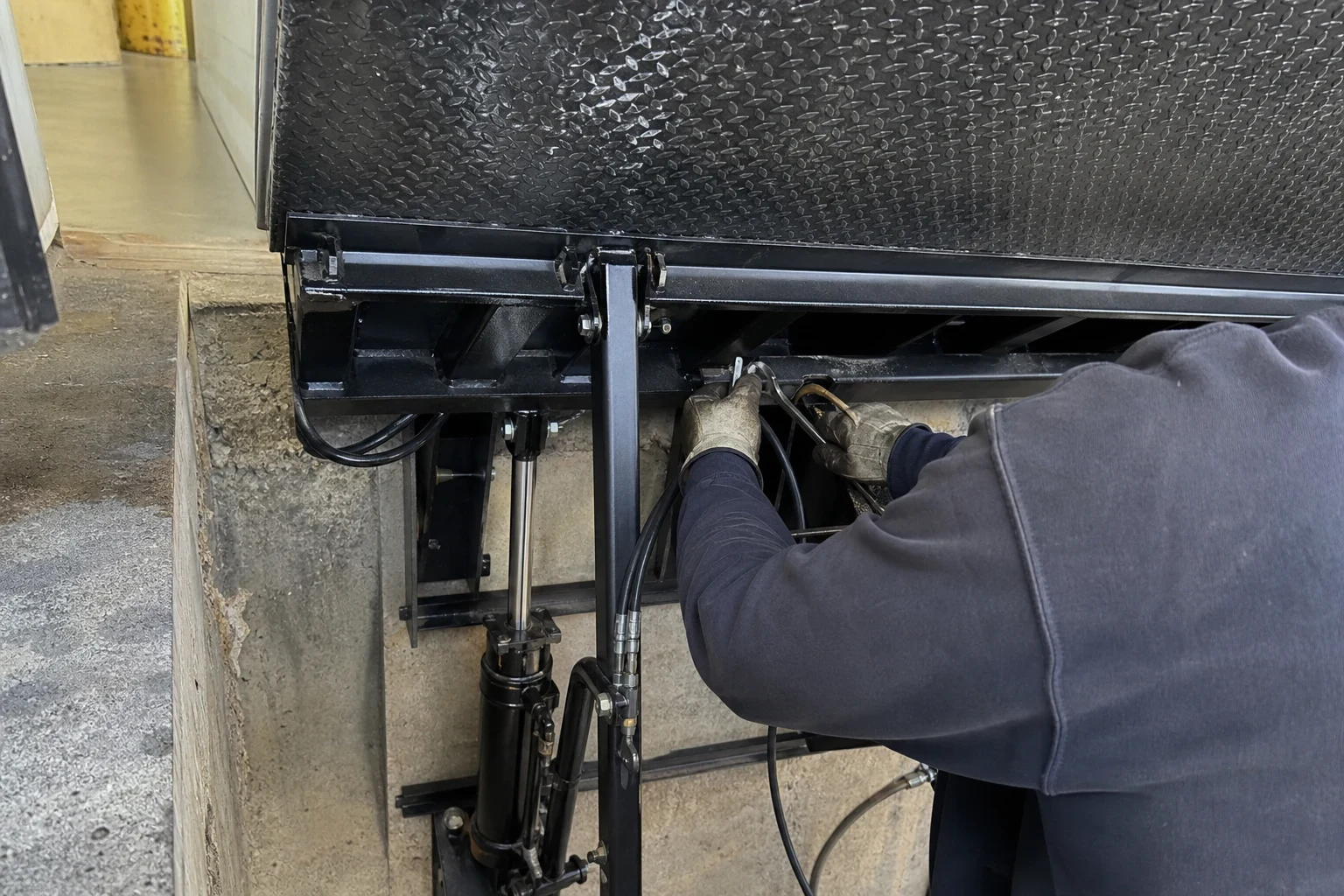
Most of the quality in an install is hidden once it is finished. The condition of the pit curb angle, the depth of the anchors, the routing of conduit and the shimming under a frame all decide how the equipment behaves years from now. That is why we photograph each of those stages and send the images to you, so the record of what sits under the plate belongs to your facility and not just to us.
We plan the work around your receiving schedule, usually pulling a single door while trucks carry on unloading at the others.
What an installation covers
Site survey and measurement
We measure pit dimensions, dock height and door openings, and ask which trailers you receive most. Those numbers set the leveler length, capacity and lip size, so the equipment is chosen for your traffic rather than a catalog default.
Pit and curb preparation
Old equipment comes out and the pit is cleaned down to sound concrete. Damaged curb angle or spalled edges are shown to you in images, with a plain recommendation, before we set anything new.
Dock leveler setting
The leveler is set level, shimmed, welded or anchored to the curb angle and tested through its full range. We check that the lip lands cleanly on a trailer bed and stores flush with the floor.
Vehicle restraint mounting
Restraints are anchored to the dock face at the height your trailers' rear impact guards actually sit. Signal lights inside and out are wired and tested so drivers and forklift operators read the same status.
Door installation
Overhead doors, high speed doors and rolling grilles are hung square in the opening, with tracks, springs or drives adjusted for smooth travel and a full seal at the floor.
Commissioning and handover
We run every unit through repeated cycles with your staff present, walk them through daily use, and send the complete image record from survey to final test.
Signs a position needs new equipment
Repairs keep coming back
When the same leveler needs hydraulic or hinge work every season, the cost of keeping it running often passes the cost of replacing it. We will tell you honestly which side of that line you are on.
The lip no longer reaches
If forklifts are bridging a gap or climbing a steep grade onto trailers, the leveler is likely too short for the trucks you now receive.
No restraint at a busy door
Wheel chocks alone depend on a driver remembering to set them. A vehicle restraint holds the trailer to the dock and adds a clear signal for everyone working the position.
Cracked pit or loose frame
Freeze and thaw cycles through a northeastern Pennsylvania winter can work water into a damaged curb and loosen anchors. Movement in the frame usually means the fix has to start at the concrete.
A new door position or layout
Adding a dock, changing a cold room or reworking a building calls for equipment planned together, so the door, leveler and restraint work as one position.
How an installation day runs
- 1
Walkthrough and written scope
We visit, measure and document each position. You receive a written scope listing the equipment, any concrete or electrical work and what we found in the pit.
- 2
Scheduling around receiving
We agree on which doors come out of service and when. Usually that means working one position while the rest of the dock stays open.
- 3
Removal and preparation
The work area is coned off, old equipment is removed and the pit is cleaned and photographed. Anything unexpected is shown to you before we continue.
- 4
Setting and connecting
New equipment is set, anchored and wired, and the shims, welds and connections are recorded on camera before plates and covers go on.
- 5
Testing, cleanup and handover
We cycle each unit under load, clear the debris and old equipment from your floor, and go over operation with your team before the door returns to service.
What shapes the price of new dock equipment
We quote from a visit to your dock, not from a price list, because no two pits or openings are alike. Your written scope puts each item on its own line. If pulling the old equipment reveals something that changes the job, you see the images and approve the change before we go further.
- Which equipment, and how heavy-duty
- A hydraulic leveler carries a higher price than a mechanical one, and a longer deck or greater rated capacity raises it further. Among doors, high speed models sit at the top of the range.
- Condition of the pit
- A clean, square pit with sound curb angle keeps the job simple. Spalled concrete, rusted angle or an out-of-size pit adds preparation work.
- Electrical work
- Powered levelers, restraints and doors need power and controls at the position. Existing circuits nearby keep this modest, while new runs add time.
- Number of positions
- Several doors done in one visit share setup and mobilization, which usually lowers the cost per position.
Installation questions from facility managers
Something not covered here? (570) 678-1589
How long is each door down during an install?
That varies with the equipment and the state of the pit, so we estimate each position at the walkthrough. Swapping a leveler into a sound pit goes faster than a job needing concrete repair or a new electrical run. We take doors one at a time so receiving carries on.
Can you install equipment we bought somewhere else?
Usually, yes. We will look at the unit and your pit first to confirm it suits the opening and the trucks you receive. If it does not, we will say so before anything is removed.
Why do you send photos of the installation?
Most of what makes an install last is covered once the job is done. Images of the pit, anchors, welds and wiring give you a record for your own maintenance files and for whoever services the dock later.
Do you help choose the right equipment?
Yes. We base the recommendation on your dock height, trailer mix and traffic. If you want to compare options in more detail, our loading dock equipment sales page covers what we supply.
Do you serve facilities outside Nanticoke?
Yes. We regularly work at facilities in Hanover, Plymouth, Wilkes-Barre, Kingston and Mountain Top, as well as other towns around Nanticoke. Mention where your building sits when you phone, and we will tell you straight away whether it falls within our area.
What happens after the install?
We hand over the image record and go over daily operation with your staff. Many facilities then add the new positions to a loading dock preventative maintenance plan so small adjustments are caught early.
Talk through your next dock position
Tell us which doors you are planning and what trucks you receive. We will arrange a walkthrough, measure the dock and send you a written scope with images of what we found.