ServicesPreventative Maintenance
Loading Dock Preventative Maintenance in Nanticoke
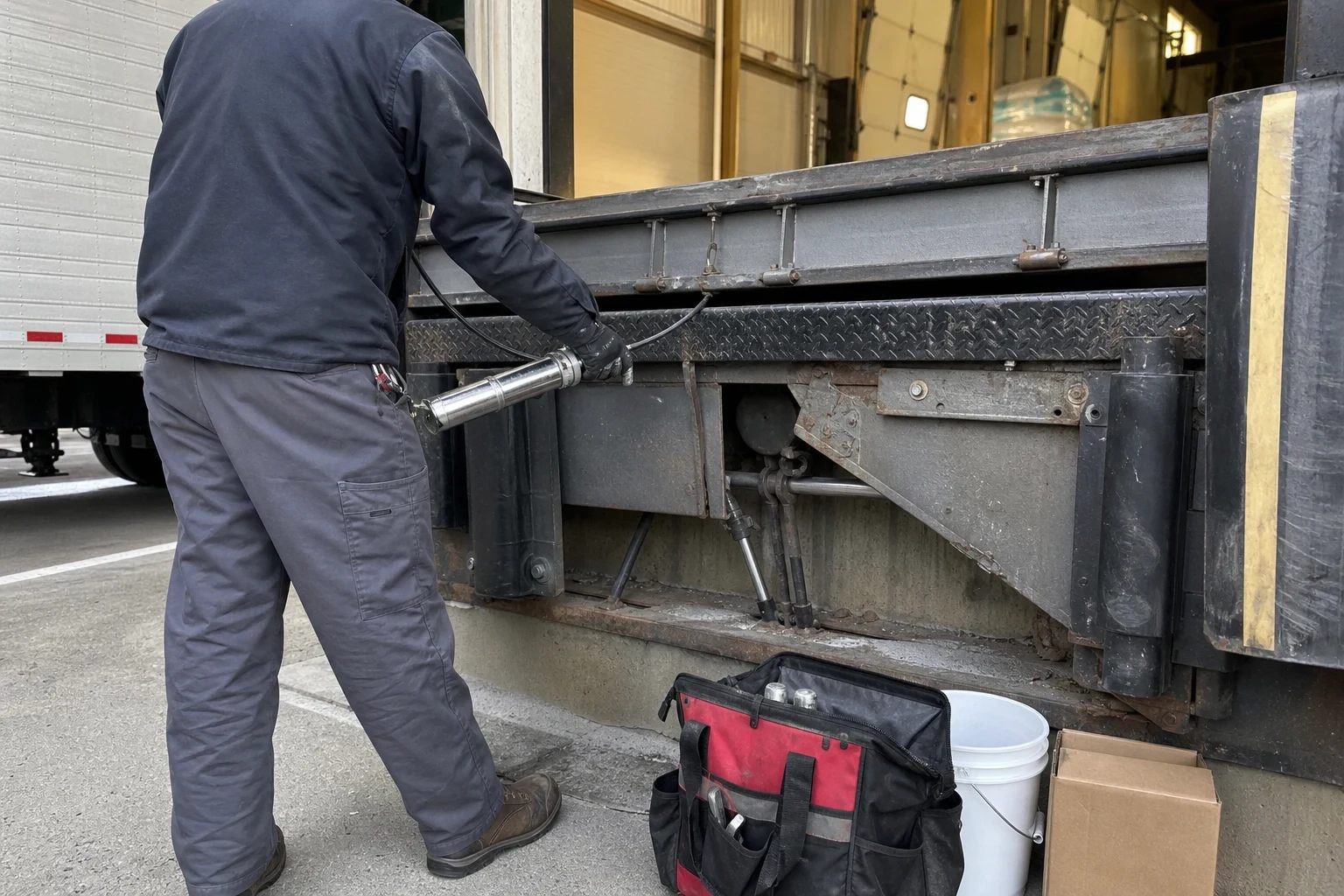
We service dock levelers, vehicle restraints, overhead doors and seals on a set schedule, so small wear gets caught before it stops a truck at your door. After each visit you receive a report with photos of what we checked, what we adjusted and what needs attention next.
Scheduled care for the equipment your dock runs on
Loading dock equipment wears quietly. A hydraulic hose weeps a little more each month, a lip hinge pin loses its grease, a door spring loses tension cycle by cycle. None of it looks urgent until a leveler settles under a pallet jack or a door refuses to close at the end of a shift. Preventative maintenance trades those surprises for short, planned service windows.
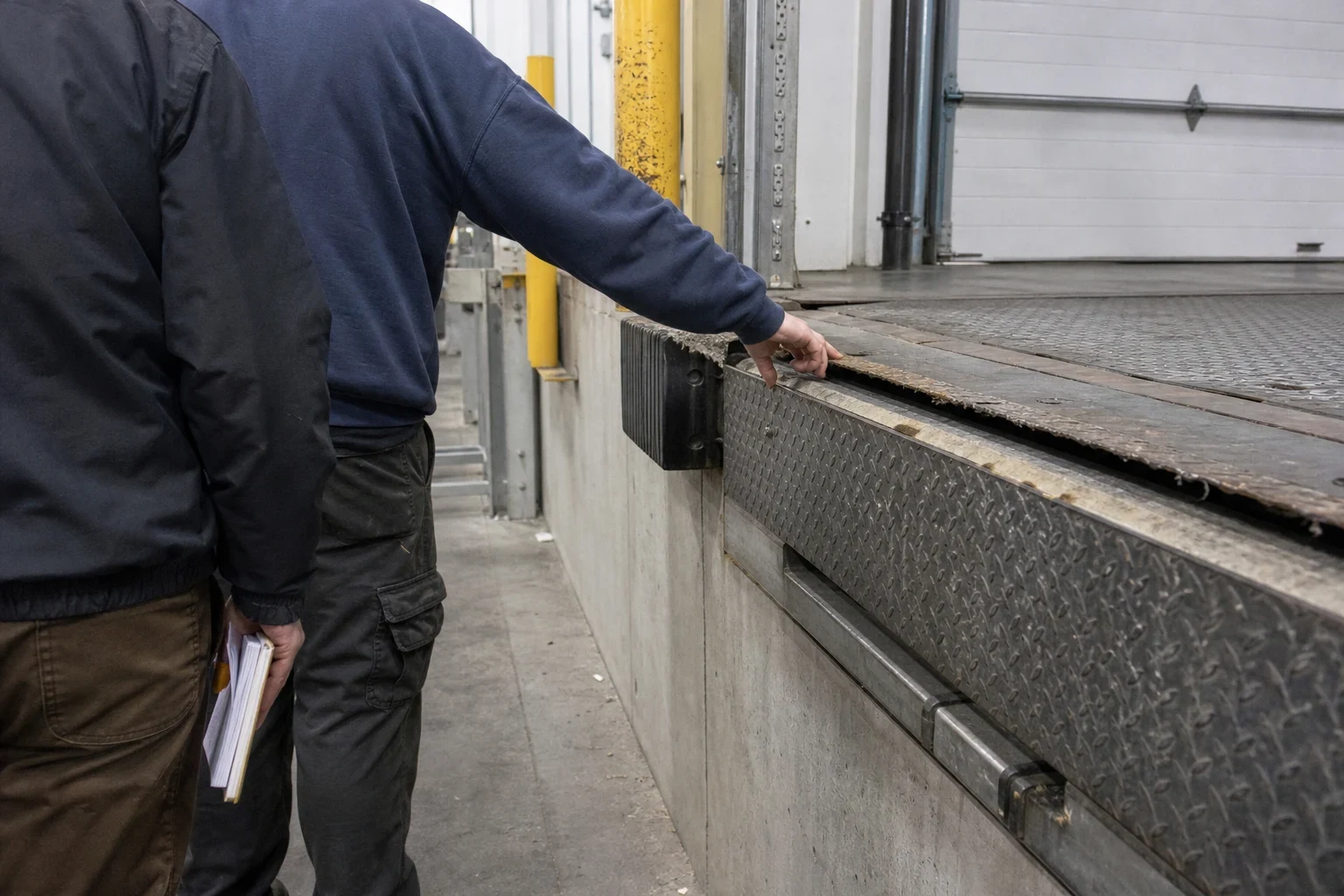
We work dock by dock through your facility, inspecting, cleaning, lubricating and adjusting each piece of equipment at its service points. Every finding is photographed in place, so your maintenance manager, safety lead or property owner sees exactly what our technician saw without walking the dock.
It suits warehouses, distribution centers, grocery and retail receiving areas and manufacturers that run their doors hard. If something is already failing, we say so plainly and explain whether a proper repair through our dock levelers or overhead doors service makes more sense than another adjustment.
What a maintenance visit covers
Dock leveler inspection and lubrication
We check the deck, lip, hinge pins, springs or hydraulic cylinders, hoses, fluid level and toe guards. Pivot points are cleaned and greased, and we cycle the leveler through its full range while watching for binding or drift.
Vehicle restraint testing
We engage each restraint, check the hook or barrier for wear and test the inside and outside light signals. Controls and interlocks are confirmed to respond the way they should.
Overhead and high speed door service
Springs, cables, rollers, tracks and hinges are inspected and adjusted. We check door balance, test reversing edges and photo eyes, and look over bottom seals and panels for impact damage.
Seals, shelters and bumpers
Torn seals let weather onto the dock, and worn bumpers let trailers strike the building. We measure bumper wear and record seal damage so you can plan replacement within your own budget cycle.
Photo report and priority list
Each door position gets its own page of images and notes, rated as fine for now, watch at the next visit, or fix soon. Nothing is buried in a general summary.
Signs your dock is due for preventative maintenance
- Levelers that drift or bounce
- A deck that settles under load, rises slowly or bounces as a forklift crosses usually points to spring tension, hydraulic pressure or a worn hinge. It gets worse with every load.
- Doors that grind or hesitate
- Noisy rollers, a door that shudders on the way up or one that reverses for no clear reason are early signs of track, spring or sensor trouble.
- Restraint lights out of sync
- If the outside light shows green while the restraint is not engaged, or drivers have stopped trusting the signals, that safety gap needs attention before the next trailer backs in.
- Drafts and daylight around trailers
- Gaps at the seal or shelter mean lost heat and moisture on the dock floor. Over a Northeast Pennsylvania winter that adds up to higher energy use and slippery floors.
- Service history nobody can find
- When the last service date lives in someone's memory, or nowhere at all, a first documented visit sets a baseline for everything that follows.
How a maintenance visit runs
- 1
Plan around your receiving schedule
We start with a phone conversation about your door count, the equipment at each door and the hours when your trucks thin out. The work is then sequenced so most doors keep running.
- 2
Lock out and photograph as found
Each position is taken out of service and locked out before we start. We photograph the equipment as we find it, then inspect, clean, lubricate and adjust.
- 3
Test under operation
Levelers, restraints and doors are cycled through full operation and safety devices are checked. Only once a door passes those checks do we hand it back to your crew and set up at the next one.
- 4
Walk-through and report
Before we leave, we walk your contact through anything urgent. The full written report with images follows, with recommended repairs listed and priced separately so you decide what happens next.
What sets the price of a maintenance program
The two biggest drivers are the amount of equipment on your dock and the number of visits per year. Once we know your setup, we give you a quote by phone. Any repair we find is listed as its own line, never folded into the visit.
- Number of dock positions
- Each position adds inspection time for its leveler, restraint, door and seal. Larger facilities often cost less per position because travel and setup are shared.
- Equipment type and age
- Hydraulic levelers, powered restraints and high speed doors have more service points than mechanical levelers and manual doors. Older equipment can take longer to adjust and may need parts that are harder to source.
- Visit frequency
- Docks running multiple shifts usually need quarterly visits, while lighter-use docks may need two a year. The schedule sets the annual total.
- Condition at the first visit
- Equipment that has gone a long stretch without service takes more cleaning, adjustment and documentation the first time through.
Questions about dock preventative maintenance
- How often should loading dock equipment be serviced?
- Three to six months between visits suits most facilities. Docks that run several shifts a day lean toward quarterly, while a retail receiving door that sees a few trucks a day may need less. We suggest a schedule based on your traffic and the condition we find.
- Do you shut down the whole dock during maintenance?
- No. Our technician services a single door at a time, and your other positions stay open for trucks. Each one is down only while we inspect and test it, and we plan the order around your receiving schedule.
- What does the report actually show?
- Each report shows the equipment as we found it, close-ups of worn or damaged parts, and the result after adjustment where that applies. It gives you something concrete to share with management or a property owner when planning repairs.
- Will you push repairs we don't need?
- Every item in the report carries a priority and a short reason. Some things are fine to watch until the next visit, and we say so. You decide what gets repaired and when.
- Can you maintain a dock with mixed equipment brands?
- Yes. Many facilities have levelers, restraints and doors from different makers, added over the years. If a part is specific to one manufacturer, we tell you the lead time before ordering.
- Does maintenance help with our safety program?
- Regular inspection gives you dated records, with pictures, of what was checked and what was found. Those records make it easier to show that dock equipment is being looked after and to plan corrections before they become incidents.
Put your dock on a maintenance schedule
Give us a rough count of your doors and the equipment at each one. We'll suggest a sensible schedule and give you a quote by phone.