ServicesOverhead Doors
Commercial Overhead Doors in Nanticoke
Sectional dock doors take a beating, and a stuck or drafty one slows receiving. We fix the springs, cables, track, sections, seals and operators behind them. Before any work, you see photos of the problem and a plain recommendation, and the finished door is recorded the same way.
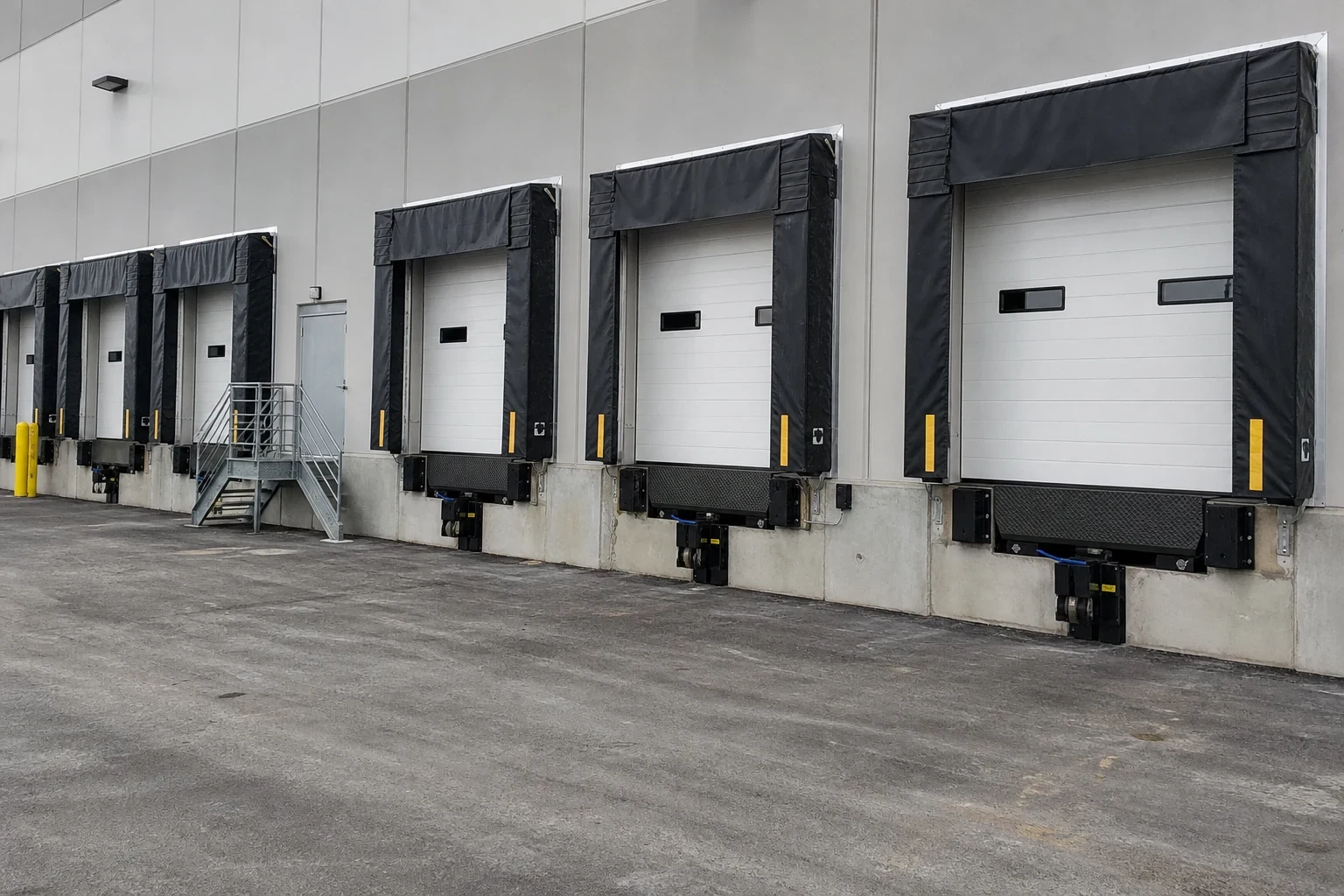
Dock doors that run smoothly and close tight
An overhead door at a dock opens and closes dozens of times each shift, gets clipped by a forklift mast now and then, and relies on springs holding hundreds of pounds of steel under tension. Once one part wears, the rest pick up the slack. A frayed cable loads up the drum on the other side, a bent track makes the rollers drag, and a hardened bottom seal lets cold air and debris onto the dock floor.
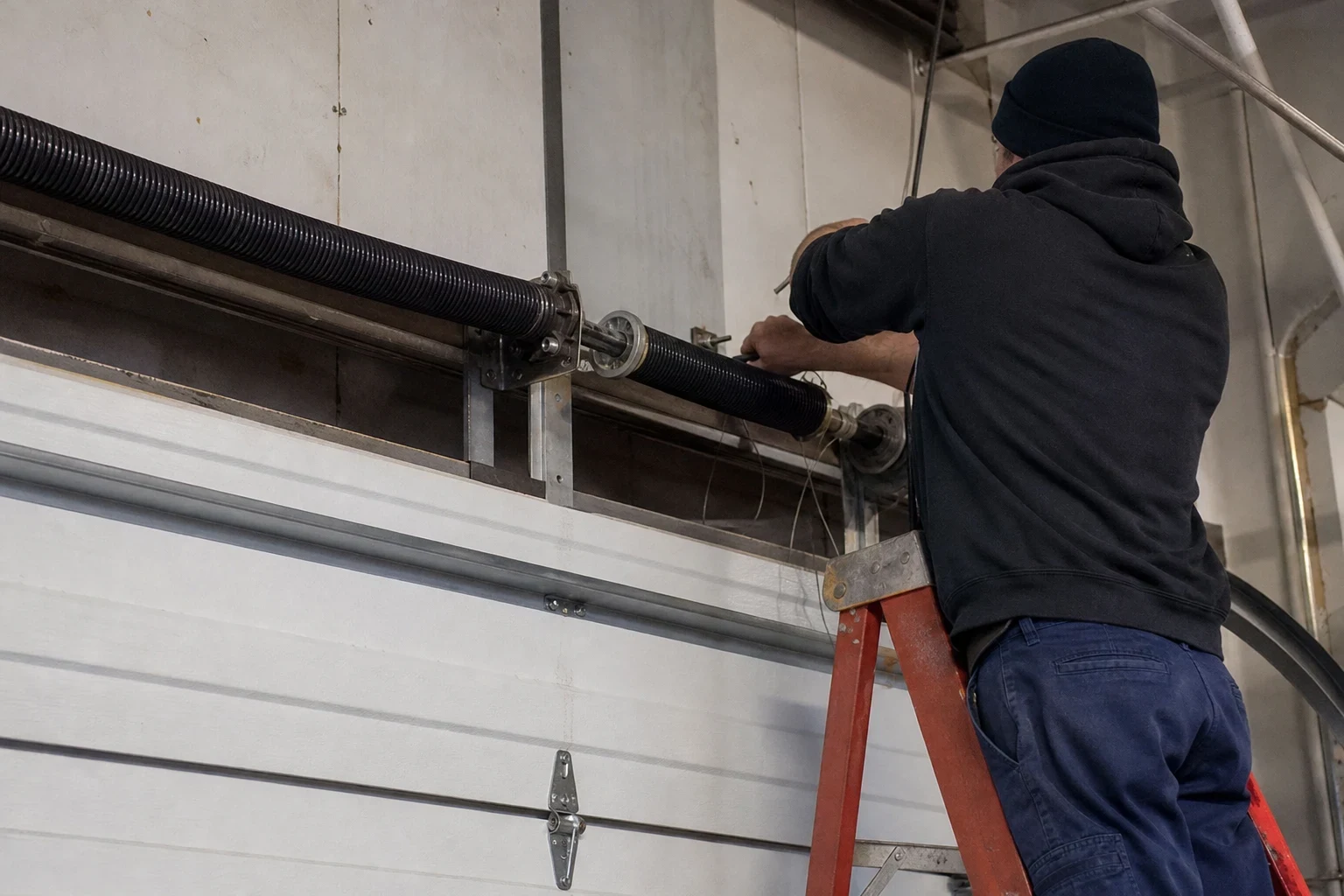
We check the entire door, not only the piece that broke. Before we adjust or remove anything, we photograph the springs, cables, track, hinges and section faces and explain what each picture shows. The decision on what gets done is yours.
The bulk of our overhead door work is repair and adjustment. If a door is beyond saving, we tell you directly and lay out the replacement choices, such as insulated sections or switching busy openings to high speed doors.
The parts of the door we repair and replace
- Springs, cables and drums
- A fatigued or snapped spring is swapped for one wound to suit what your door really weighs, and worn lift cables and drums are renewed during that same visit. Fitting springs as a matched pair keeps the door in balance, so the operator is not straining against it.
- Track, rollers and hinges
- Bent vertical track, cracked roller stems and worn hinges are the usual result of impact and age. We straighten or replace track sections, fit new rollers and re-secure brackets to the wall.
- Panel and section repair
- A dented or creased section can often be replaced on its own. We match the profile and finish so the door closes flush and looks like one piece.
- Seals and weatherstripping
- Bottom astragals, side seals and header seals keep weather, pests and debris off the dock. We replace them in a material suited to cold and to road salt carried in on trailer tires.
- Operators and safety sensors
- Commercial openers, safety sensors and bottom reversing edges get serviced or swapped out as needed. Before we leave, we confirm the door halts and travels back up when something is in its path.
Signs your dock door needs attention
The door is lopsided or jerky
One side lifting ahead of the other usually means a cable, drum or spring problem. Running it that way can pull the door out of the track.
A loud bang from the header
That is often a torsion spring breaking. Leave the door closed and keep people clear until it is looked at.
Daylight around the edges
Gaps at the floor or jambs mean the seals have flattened, torn or shrunk. You lose heat in winter and invite pests and debris year-round.
Grinding, rubbing or shaking
Dry or broken rollers and twisted track make noise before they fail. Catching it early is usually a small repair.
Visible impact damage
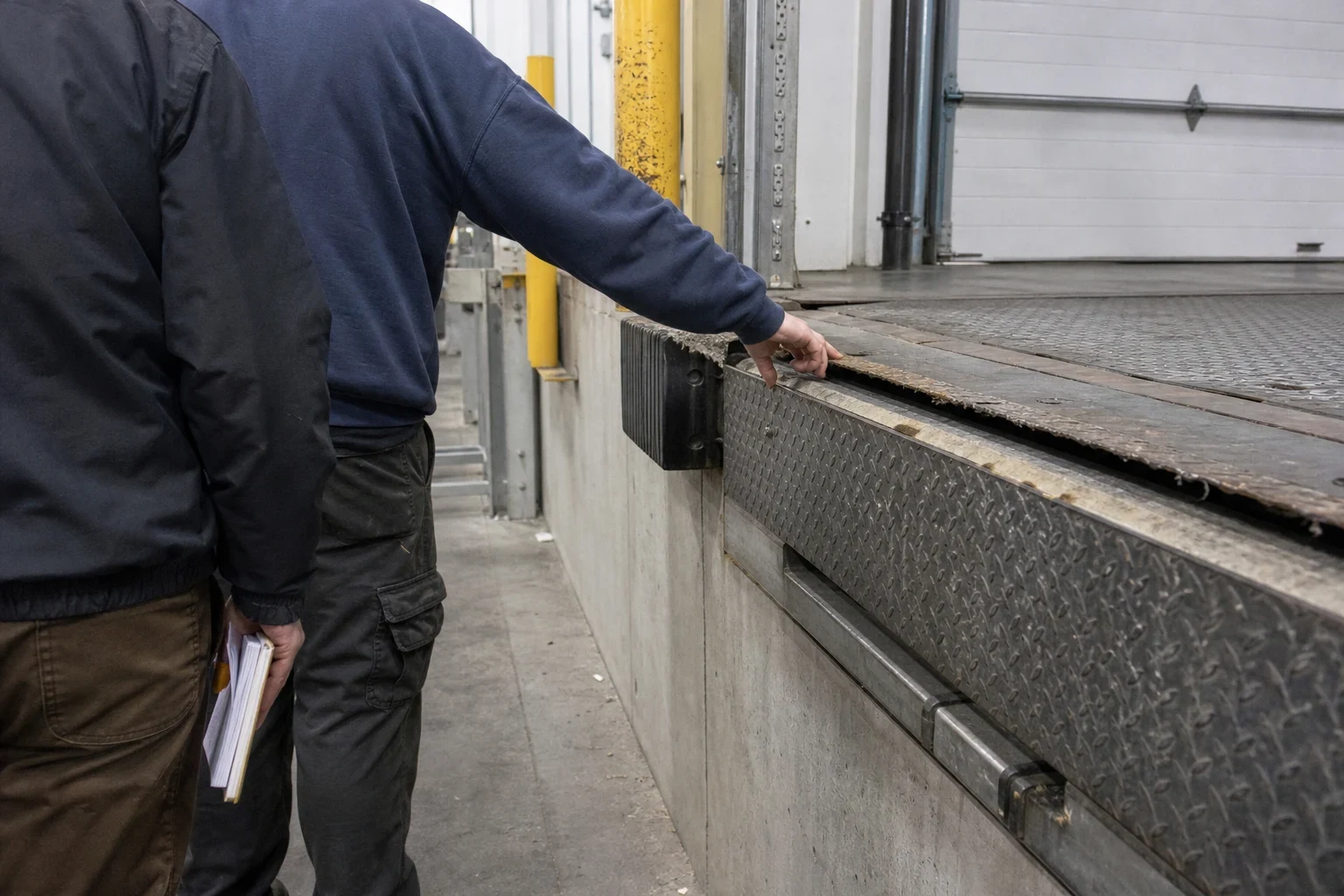
Creased sections, kinked track or a bracket pulled from the wall after a forklift strike should be checked, even if the door still runs.
The operator strains or reverses for no reason
An unbalanced door or a misaligned sensor will make the operator work hard or stop mid-travel.
What affects the cost of overhead door work
Every price depends on the door and what we find on it. We explain the drivers before we start and list the parts so you know what you are paying for. These are the things that move the number most.
How big and heavy the door is
A wide insulated door hangs a lot more steel from its springs than a small uninsulated one. That weight sets the spring size, cable gauge and bracket strength, so it shapes most of the parts list.
How much is damaged
A single spring is a different job from a door with bent track, a creased section and a frayed cable. Impact damage often reaches more parts than it first appears.
Parts availability
Common spring and roller sizes are straightforward. Older or discontinued panel profiles may need to be sourced or replaced as a full door.
Access and scheduling
High openings, tight dock aprons, or work arranged outside your busiest hours can change how the job is staffed and planned.
How a service visit runs
- 1
Talk it through by phone
Tell us which doors are giving trouble, how they are being used and when the dock is quietest. We plan the visit around your receiving schedule where we can.
- 2
Inspect and photograph
On site, we lock out the operator and photograph each problem: the spring, the cable end, the bent track, the worn seal. You see what we see before we recommend anything.
- 3
Recommend and agree
We explain what needs doing now and what can wait, with the parts listed out. Nothing proceeds until you approve it.
- 4
Repair with the dock protected
The opening we are working on gets cordoned off, and our tools and parts stay out of forklift lanes. We finish each door before moving to the next, so your other bays keep loading.
- 5
Test, clean up, document
We cycle the door, balance the springs, test the safety reversal and sweep up. You receive after photos alongside the before set for your maintenance file.
Common questions about dock doors
A forklift hit our door. Is it repairable, or does it need to be replaced?
Most doors that take a hit can be fixed. Typically we swap the damaged sections, track pieces and rollers and keep the rest of the door. When the damage spreads across several sections, or the door is old enough that new parts will not match, we show you what we found and explain why a new door is the better choice.
One of our door springs broke. Is it okay to keep using the door until you arrive?
We recommend against it. With a torsion spring gone, the cables and operator take the full weight of the door, and it can drop with no warning. Keep that opening closed and keep people out from under it until we have repaired it.
Will you service any brand of door?
We work on the sectional overhead doors you find at warehouse, distribution and retail docks, whatever the make. If the hardware is uncommon, we note the tags and part numbers at the first visit so we can find a proper match.
Does receiving have to shut down during the repair?
Usually not. We close off just the door being repaired, and trailers can still back into the neighboring bays. Tell us when your busiest deliveries come in and we will schedule around them.
Would a high speed door be a better replacement for ours?
Where an opening cycles nonstop or divides temperature zones, a high speed door can reduce wear and energy loss. For a typical dock door, a sectional door that is kept up properly is often the sensible pick. We are glad to compare the two, and our High Speed Doors page goes into that option further.
Get a clear look at your dock doors
Tell us which doors are acting up and how your dock runs. We will arrange a visit, photograph what we find and explain your options before any work starts.